10 Best Ways How to Protect Heat Waves
Summer heat waves now arrive earlier and last longer, turning gardens into survival challenges. Learning how to protect heat waves from damaging your plants requires understanding both immediate shade tactics and long-term soil amendments that buffer root zones against extreme temperatures. The smell of scorched tomato leaves or the sight of wilted lettuce at 10 a.m. signals that passive strategies have failed. Protecting against heat waves means engineering microclimates, adjusting irrigation schedules to match evapotranspiration rates, and selecting cultivars with proven thermotolerance.
Materials
Shade cloth remains the primary physical barrier. Select 30-50% density fabric for most vegetables and ornamentals. Aluminum-coated versions reflect infrared radiation more effectively than black polyethylene. Anchor points must withstand 20 mph winds without transferring stress to plant stems.
Organic mulch controls soil temperature fluctuations. Apply 3-4 inches of shredded hardwood bark or straw in a 6-inch radius around each plant. Pine bark nuggets offer superior longevity but slower decomposition, contributing minimal nitrogen during the first season.
Soil amendments that increase cation exchange capacity improve water retention. Incorporate compost at a 1:3 ratio (compost to native soil) before planting. Choose products with NPK values near 1-1-1 to avoid excess nitrogen that forces tender growth vulnerable to heat stress. Aged manure at 0.5-0.5-0.5 works well for established beds. Biochar at 10% volume increases moisture-holding capacity by up to 18% while raising pH by approximately 0.3 units. Test soil pH before application; target 6.2-6.8 for most edibles.
Hydrogel polymers absorb 400 times their weight in water. Mix 1 teaspoon per gallon of potting mix for containers. Field applications require 2-3 pounds per 100 square feet tilled to 6-inch depth.
Anti-transpirant sprays form a semi-permeable membrane on leaf surfaces. Kaolin clay suspensions reflect UV radiation and reduce leaf temperature by 4-7°F. Reapply every 14 days or after 0.5 inches of rain.
Timing
Install heat protection systems when daytime highs consistently exceed 88°F. In USDA Hardiness Zones 7-9, this typically occurs from late June through August. Zone 10 gardeners should maintain shade structures from May through October.
Spring plantings must mature before peak summer heat. Calculate backward from your region's average heat wave onset. Tomatoes need 60-80 days from transplant; plant by April 15 in Zone 7, by March 1 in Zone 9.
Fall crop timing requires equal precision. Direct-sow lettuce and spinach 8 weeks before first frost, positioning germination during cooling trends rather than late-summer peaks.
Mycorrhizal fungi colonize roots most effectively when soil temperatures range between 70-85°F. Inoculate 2-3 weeks before heat stress periods to establish symbiotic networks that improve phosphorus uptake and drought tolerance.
Phases
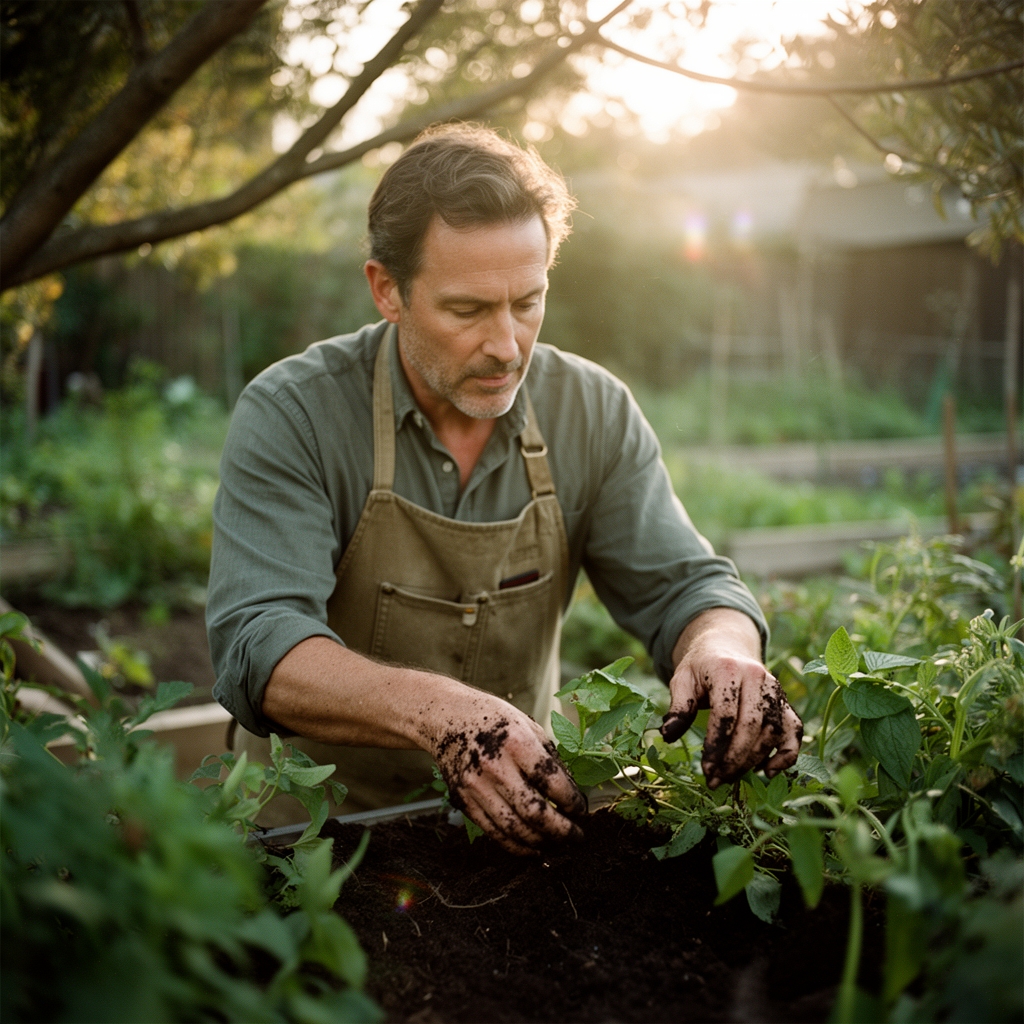
Sowing: Direct-seed heat-sensitive crops in partial shade or use row covers to reduce soil surface temperature by 10-15°F. Germination rates for lettuce drop below 50% when soil exceeds 75°F. Pre-sprout seeds on damp paper towels at 65-70°F for 24 hours before planting.
Pro-Tip: Water seed furrows with cold tap water immediately before sowing to create a temporary cool pocket. Soil temperature recovers within 3 hours, sufficient for seed placement and initial imbibition.
Transplanting: Move seedlings to garden beds during evening hours when stomata are less active. Root balls should be moist but not saturated; excess water in the planting hole creates anaerobic conditions that stress roots already struggling with heat.
Dig holes 2 inches deeper than root mass and backfill with native soil amended with 10-20-10 starter fertilizer at half the label rate. High phosphorus promotes rapid root development. Position transplants so the first true leaves sit 1 inch above soil grade to prevent stem rot in mulched beds.
Pro-Tip: Apply 0.25 inch of water immediately after transplanting, then withhold irrigation for 36 hours. Mild water stress forces roots to grow outward rather than circling in the original root ball shape.
Establishing: Monitor auxin distribution during the first two weeks. Plants experiencing heat shock redirect growth hormones from shoots to roots, causing stunted appearance. This redirection is protective, not pathological.
Prune lower leaves at a 45-degree angle to improve air circulation. Remove no more than 20% of foliage in a single session. Each cut should be 0.25 inches above the node to prevent dieback.
Pro-Tip: Foliar feed with liquid kelp (0-0-1 NPK ratio) diluted to 2 tablespoons per gallon. Apply at dawn when stomata open. Kelp contains cytokinins that partially counteract heat-induced senescence.
Troubleshooting
Symptom: Blossom-end rot appears as sunken black lesions on tomato and pepper fruits. Solution: This calcium deficiency results from inconsistent watering during heat waves, not soil calcium levels. Apply 1 inch of water twice weekly rather than daily shallow irrigation. Maintain soil moisture at 60-70% field capacity.
Symptom: Leaf margins turn brown and crispy (tip burn) on lettuce and brassicas. Solution: Heat disrupts calcium transport to rapidly growing tissue. Reduce nitrogen fertilizer by 30% and increase potassium with 0-0-30 supplement at 1 tablespoon per 5 gallons of water weekly.
Symptom: Spider mites proliferate, visible as fine webbing on leaf undersides. Solution: Mites thrive when humidity drops below 40%. Spray leaf undersides with water at dawn and dusk to raise humidity. Predatory mites (Phytoseiulus persimilis) establish colonies within 5-7 days if humidity exceeds 50%.
Symptom: Blossoms drop without setting fruit. Solution: Temperatures above 95°F denature pollen proteins in tomatoes. Install shade cloth to reduce ambient temperature by 8-12°F. Choose heat-set varieties like Phoenix or Heatwave II for future plantings.
Symptom: Sunscald creates white or tan patches on fruit shoulders. Solution: Leave adequate foliage cover on tomato plants. Do not prune suckers during peak heat. Apply kaolin clay to exposed fruits.
Maintenance
Irrigate deeply and infrequently. Apply 1-1.5 inches of water per week in a single session rather than dividing into daily doses. Deep watering encourages roots to grow 12-18 inches deep where soil temperature remains 10-15°F cooler than the surface.
Install drip irrigation on timers set for 4-6 a.m. when evaporation rates are minimal. Emitters should deliver 0.5-1 gallon per hour per plant. Run the system for 90 minutes to achieve 1-inch penetration in loam soils.
Test soil moisture at 4-inch depth with a probe or your finger. Soil should feel cool and slightly damp, not wet. Overwatering during heat waves creates hypoxic conditions that suffocate roots and promote Pythium root rot.
Fertilize at 50% strength during extreme heat. Plants experiencing stress cannot process nutrients efficiently. Excess salts from concentrated fertilizers draw water from roots through reverse osmosis. Switch to organic sources with controlled-release mechanisms.
Refresh mulch monthly. Decomposition accelerates in heat, reducing layer depth by 30-40% between June and August.
FAQ
What temperature kills most garden plants?
Sustained air temperatures above 100°F cause protein denaturation in mesophyll cells. Most vegetables experience permanent damage after 6 hours at 105°F. Soil temperatures above 95°F kill beneficial bacteria and mycorrhizal fungi.
Can plants recover from heat stress?
Yes, if damage is limited to leaf tissue. Plants regenerate foliage within 14-21 days when temperatures moderate and irrigation resumes. Root damage requires 4-6 weeks for recovery and often results in permanent yield reduction.
Does misting cool plants effectively?
Misting reduces leaf temperature by 5-8°F through evaporative cooling but increases humidity that may promote fungal disease. Mist only during low-humidity periods (below 50%) and cease by 10 a.m. to allow foliage to dry.
How does shade cloth percentage work?
The percentage indicates light blocked. 30% cloth transmits 70% of full sun, reducing intensity from 10,000 to 7,000 foot-candles. Leafy greens thrive under 50% shade; fruiting crops need 30% maximum to maintain photosynthetic rates.
Should I fertilize during a heat wave?
No. Apply fertilizer when seven-day forecasts show daytime highs below 90°F. If deficiency symptoms appear during heat, use foliar sprays at 25% label rate rather than soil applications.