9 Pro Tips How to Resilient Edible Crops
The first freeze arrives without warning, and by morning your tomato vines are blackened rags draped over their cages. The kale you meant to harvest wilts under unexpected July heat, and the beans never germinated because the soil was still 52°F when you planted. Mastering steps to resilient edible crops means designing production systems that absorb shock and continue to yield through drought, pest outbreaks, and unseasonable temperature swings. Resilience is built before stress arrives.
Materials
Soil pH determines nutrient availability. Test annually and adjust to a target range of 6.0 to 6.8 for most edibles. Add dolomitic lime at 5 pounds per 100 square feet to raise pH by approximately 0.5 units. For lowering pH in alkaline regions, incorporate elemental sulfur at 1 pound per 100 square feet.
Organic amendments with balanced NPK ratios support long-term resilience. A 4-4-4 blend of composted poultry manure, bone meal, and kelp meal provides slow-release macronutrients and trace minerals. Apply at 2 pounds per 10 square feet at bed preparation. High-cation exchange capacity soils retain these nutrients better. Amend sandy soils with finished compost at a 2:1 ratio (two parts native soil to one part compost) to increase water-holding capacity and microbial populations.
Inoculants introduce beneficial organisms. Mycorrhizal fungi colonize root surfaces and extend phosphorus uptake by 15 to 60 percent. Apply granular inoculant directly in the transplant hole at 1 teaspoon per plant. Bacillus subtilis and Trichoderma species suppress soil-borne pathogens when incorporated at seeding.
Timing
Hardiness zones define average annual minimum temperatures, but last-frost dates govern planting schedules. In Zone 5, the last spring frost typically falls between April 15 and May 15. Warm-season crops like tomatoes, peppers, and cucurbits require soil temperatures above 60°F for germination. Use a soil thermometer at 4-inch depth for three consecutive mornings before direct seeding.
Cool-season crops tolerate frost and germinate at 40°F to 50°F. Plant lettuce, spinach, brassicas, and peas four to six weeks before the last frost date. Succession planting at two-week intervals extends harvest and buffers against single crop failures. In Zone 7, sow lettuce from mid-March through April, then resume in late August for fall harvest.
For zones with short growing seasons, start heat-loving crops indoors under full-spectrum LED grow lights six to eight weeks before transplant date. Maintain seedling temperatures at 70°F to 75°F during germination, then reduce to 65°F to harden stems and prevent legginess.
Phases
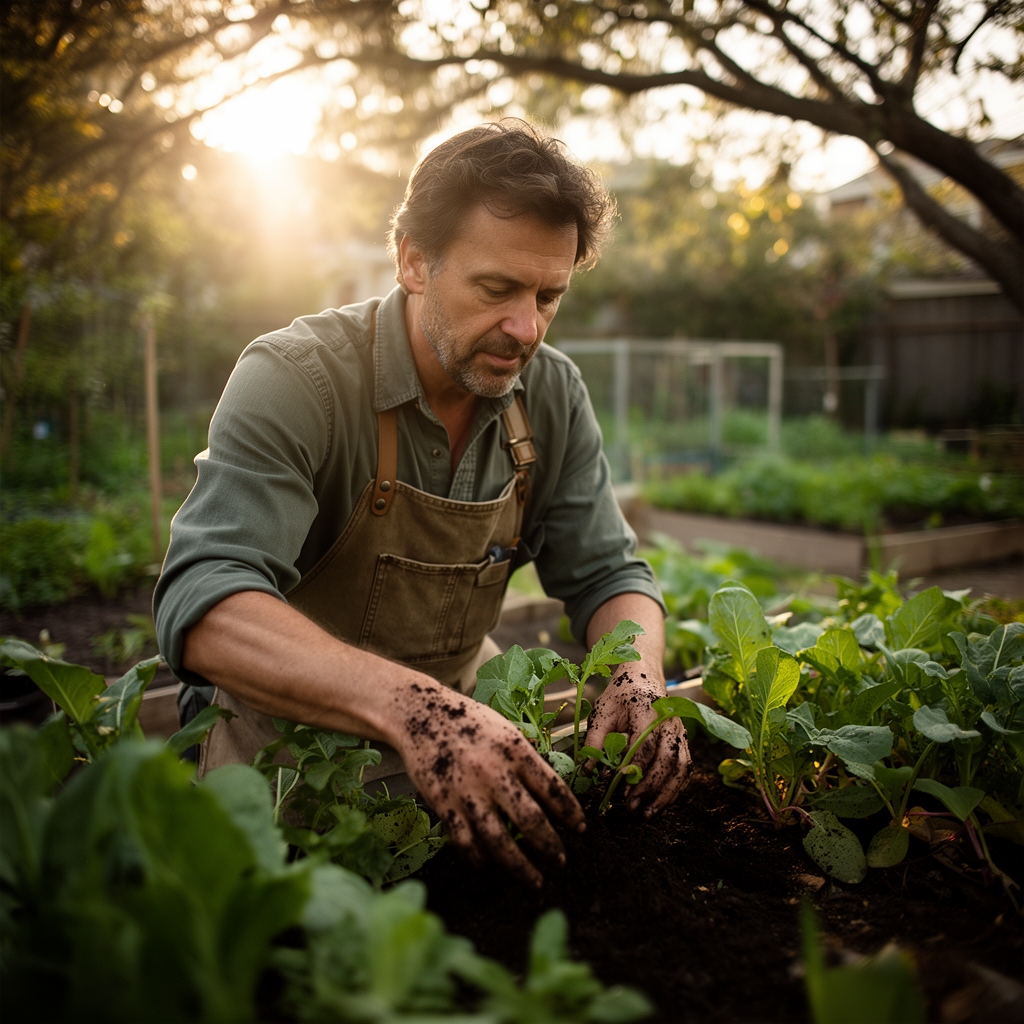
Sowing
Direct sow seeds at twice their diameter in depth. Carrot seeds require only 1/8 inch of soil cover, while beans need 1 to 1.5 inches. Firm soil contact accelerates imbibition, the first stage of germination. Roll or tamp the seedbed after sowing to eliminate air pockets.
Pro-Tip: Pre-germinate slow starters like parsley and parsnip by wrapping seeds in damp paper towels for 48 hours at room temperature. Sow once radicles emerge. This technique shortens field germination time by five to seven days and improves stand uniformity.
Transplanting
Harden transplants by reducing water and exposing them to outdoor conditions for seven to ten days. Move flats outside for two hours on day one, then increase by two hours daily. This acclimates cells to UV radiation and wind, thickening cuticle layers.
Transplant on overcast days or in early evening to reduce transplant shock. Dig holes 50 percent wider than root balls. Position transplants at the same depth they grew in containers, except tomatoes. Bury tomato stems up to the first true leaves to encourage adventitious root formation along the stem, increasing drought resilience.
Pro-Tip: Apply a kelp extract solution (diluted at 1 tablespoon per gallon) as a transplant drench. Cytokinins and auxins in kelp stimulate root hair development and improve establishment rates by 20 to 30 percent.
Establishing
Mulch with 2 to 3 inches of shredded straw or aged wood chips after transplanting. Mulch moderates soil temperature fluctuations by 10°F to 15°F, suppresses weeds, and reduces evaporation by up to 50 percent. Keep mulch 2 inches away from plant stems to prevent crown rot.
Prune indeterminate tomatoes to a single leader by removing suckers when they reach 2 inches in length. Pinch at a 45-degree angle to promote rapid callusing. This focuses auxin distribution into fruit production rather than vegetative mass, improving airflow and reducing fungal disease pressure.
Pro-Tip: Install drip irrigation before mulching. Deliver water at soil level to reduce foliar moisture and fungal spore germination. Drip systems apply water at 0.5 to 1 gallon per hour per emitter, matching plant uptake and minimizing runoff.
Troubleshooting
Symptom: Blossom end rot in tomatoes and peppers. Sunken, leathery black lesions on fruit bottoms.
Solution: Calcium deficiency caused by inconsistent watering. Maintain even soil moisture at 1 to 1.5 inches per week. Apply gypsum (calcium sulfate) at 2 pounds per 100 square feet if soil tests confirm deficiency.
Symptom: Powdery white coating on squash and cucumber leaves.
Solution: Powdery mildew, a fungal pathogen favored by humid conditions. Spray foliage with a 0.5 percent solution of potassium bicarbonate weekly. Increase plant spacing to 36 inches to improve air circulation. Remove infected leaves immediately.
Symptom: Yellowing lower leaves with green veins on tomatoes.
Solution: Magnesium deficiency, common in high-potassium soils. Side-dress with Epsom salt (magnesium sulfate) at 1 tablespoon per plant, watered in thoroughly.
Symptom: Small, deformed leaves with stippling and webbing.
Solution: Two-spotted spider mites. Spray undersides of leaves with insecticidal soap (2 percent potassium salts of fatty acids) every five days for three applications. Mites thrive in dusty, dry conditions, so overhead rinse plants weekly.
Symptom: Wilting despite adequate soil moisture.
Solution: Verticillium or Fusarium wilt, vascular fungi. No cure exists. Remove and destroy affected plants. Rotate crops to non-susceptible families for four years. Plant resistant varieties labeled with V, F, or FF resistance codes.
Maintenance
Water deeply and infrequently. Deliver 1 to 1.5 inches per week in a single session to encourage roots to grow 12 to 18 inches deep. Shallow, frequent watering creates weak root systems vulnerable to drought stress. Measure output by placing straight-sided cans in the irrigated zone.
Side-dress heavy feeders like tomatoes and brassicas with compost or 5-10-10 fertilizer at four weeks after transplanting. Apply 2 tablespoons per plant in a 6-inch ring around the stem, then water in. Nitrogen supports leaf production, but excess nitrogen delays fruiting and attracts aphids.
Scout for pests twice weekly. Check undersides of leaves, stems, and growing tips. Early detection of egg masses or first-instar larvae allows for mechanical removal before populations explode. Introduce beneficial insects like lacewings and parasitic wasps when pest populations are low to establish biocontrol.
Prune diseased foliage immediately using sanitized shears. Dip blades in 10 percent bleach solution between cuts to prevent pathogen spread. Remove no more than 25 percent of foliage at once to avoid shocking plants.
FAQ
How often should I test soil?
Test annually in late fall or early spring before amending. Labs measure pH, nitrogen, phosphorus, potassium, calcium, magnesium, and organic matter percentage. Results guide precise fertilization and prevent nutrient imbalances.
What is the best mulch for vegetable gardens?
Shredded straw and aged wood chips excel. Straw decomposes in one season, adding organic matter. Wood chips last two to three years but may temporarily immobilize nitrogen. Avoid fresh grass clippings, which mat and prevent water penetration.
Can I grow the same crop in the same bed annually?
No. Crop rotation prevents soil-borne disease buildup and balances nutrient depletion. Rotate plant families on a four-year cycle. Follow heavy feeders (tomatoes, brassicas) with nitrogen-fixing legumes (peas, beans), then light feeders (root vegetables), then a cover crop.
When should I harvest for maximum flavor?
Harvest in early morning after dew dries but before heat peaks. Sugars concentrate overnight, and cool temperatures preserve crispness. Tomatoes reach peak flavor when fully colored but still firm. Leafy greens turn bitter once temperatures exceed 80°F.
How do I overwinter perennial edibles?
Mulch asparagus and rhubarb crowns with 4 to 6 inches of straw after the first hard freeze. Cut back dead foliage to prevent disease overwintering. In Zone 6 and colder, protect perennial herbs like rosemary by moving containers into unheated garages where temperatures remain above 20°F.