6 Simple Ways How to Grow Wine Caps
Wine cap mushrooms (Stropharia rugosoannulata) fruit reliably on fresh wood chips when the substrate temperature drops below 60°F and moisture content holds near 70 percent. Learning how to grow wine caps requires matching the fungus to lignocellulose-rich materials, maintaining consistent humidity, and timing inoculation to cool weather. These burgundy-capped saprophytes decompose hardwood and straw faster than oyster mushrooms, yielding flushes within eight weeks of spawn run completion.
Materials
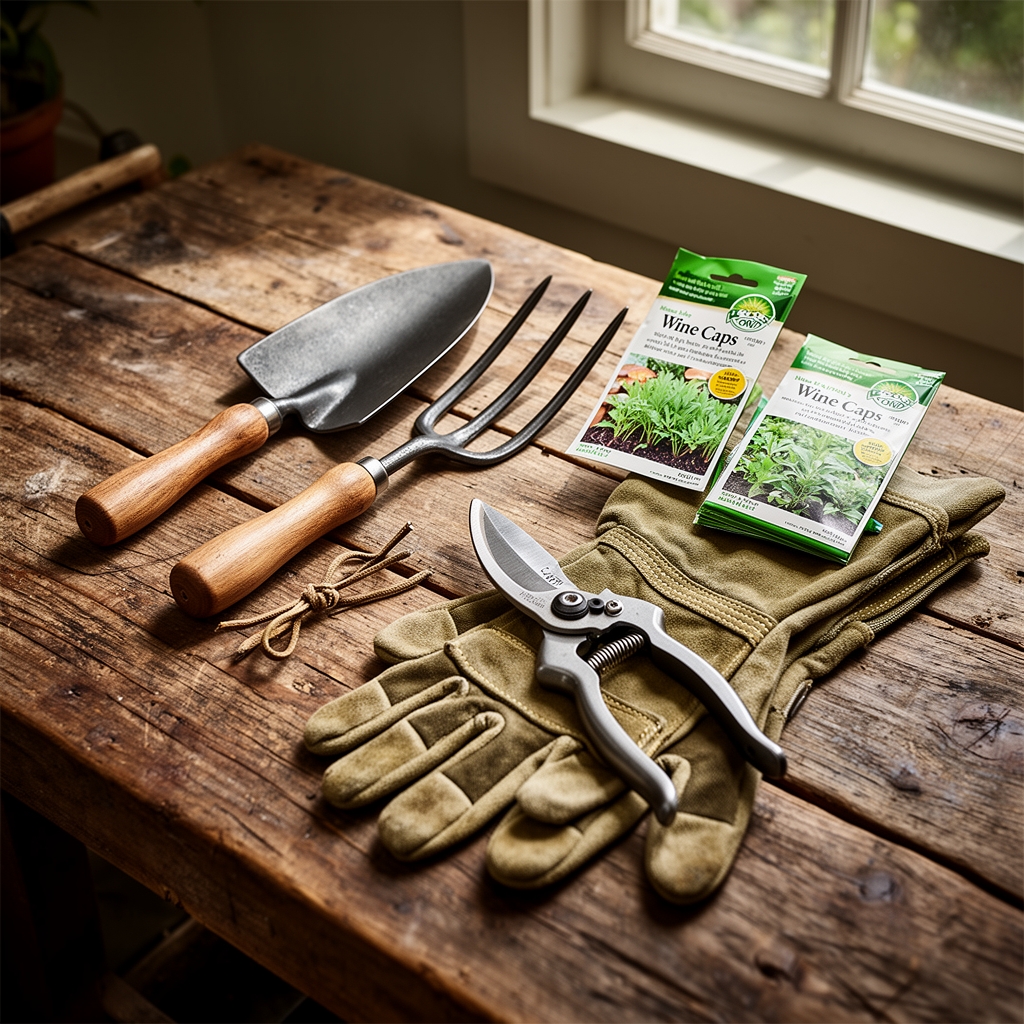
Wine caps thrive in substrates with a carbon-to-nitrogen ratio between 30:1 and 50:1. Fresh hardwood chips from oak, maple, or alder provide optimal lignin content. Avoid cedar, walnut, and treated lumber; aromatic oils and preservatives inhibit mycelial colonization.
Grain spawn or sawdust spawn serves as the inoculant. Grain spawn colonizes faster but costs more per pound. Sawdust spawn extends farther when mixed into large outdoor beds.
Supplemental nitrogen sources include soybean meal at 4-4-4 NPK or alfalfa pellets at 2-1-2 NPK. Add one cup per five-gallon bucket of chips to accelerate spawn run by seven to ten days. Soil pH between 6.0 and 7.5 supports wine cap metabolism; test with a calibrated probe before bed preparation.
Shade cloth at 50 percent density prevents substrate desiccation. Burlap or cardboard works for single-season plots. Drip irrigation or soaker hoses deliver precise moisture without compacting the chip layer.
Timing
Wine caps tolerate USDA Hardiness Zones 3 through 9. Spring inoculation occurs two weeks after the last frost date, when soil temperatures stabilize above 45°F. Fall inoculation begins six weeks before the first hard freeze, allowing partial colonization before winter dormancy.
In Zone 5, inoculate between late April and early May or mid-September through October. Zone 7 gardeners extend the window from mid-March to late October. Monitor substrate temperature with a compost thermometer; mycelial growth peaks between 55°F and 75°F.
Fruiting triggers when nighttime air temperatures drop below 55°F for five consecutive nights. Humidity above 80 percent and indirect light complete the conditions. Wine caps fruit in spring and fall, with autumn flushes often outweighing spring yields by 30 percent.
Phases
Inoculation Phase
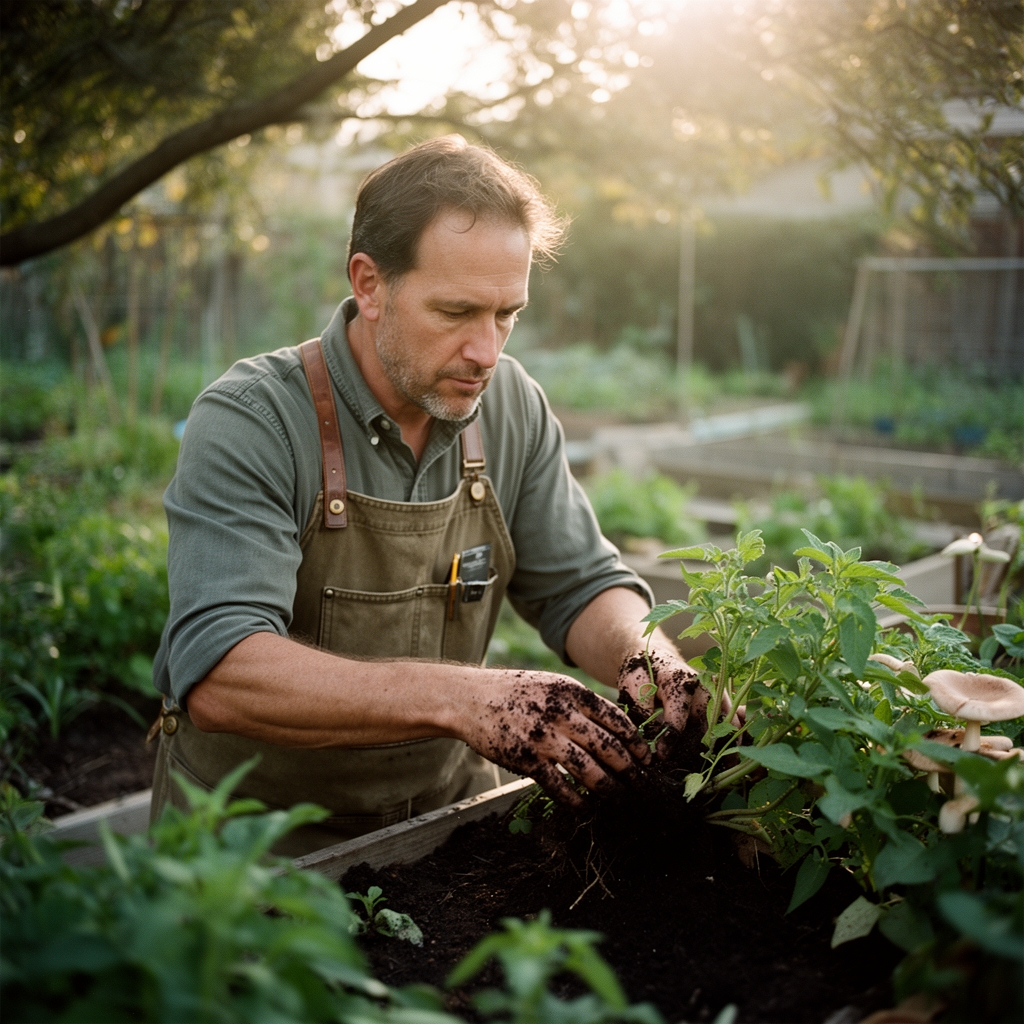
Spread a two-inch cardboard base over bare soil to suppress weeds. Hydrate the cardboard until saturated. Layer four inches of fresh wood chips on top. Scatter grain spawn across the surface at a rate of one quart per ten square feet. Add another four inches of chips and water until moisture drips from a squeezed handful.
Pro-Tip: Mix spawn into the substrate rather than layering only on top. This distributes auxin-producing hyphae throughout the bed, accelerating colonization by 15 percent.
Spawn Run Phase
White mycelium appears within seven days at optimal temperature. The network spreads laterally at one inch per week. Turn the bed gently every two weeks to aerate and redistribute moisture. Avoid disturbing the bottom two inches where the cardboard anchors the colony.
Monitor for green mold (Trichoderma). Isolated patches indicate localized anaerobic pockets. Remove contaminated material and add fresh chips to restore cation exchange capacity.
Pro-Tip: Apply a one-inch top dressing of straw two weeks after inoculation. Straw holds moisture longer than chips and raises relative humidity in the microclimate by 12 percent.
Fruiting Phase
Pins emerge as small brown knobs, then expand into caps within four days. Harvest when the partial veil just begins to separate from the stipe. Twist and pull at the base rather than cutting; this prevents bacterial soft rot in the remaining stump.
Wine caps produce three to five flushes per season. After each harvest, water thoroughly and add a half-inch layer of fresh chips to replenish lignin reserves.
Pro-Tip: Harvest in early morning when turgor pressure peaks. Caps harvested after noon lose 8 percent of their firmness within six hours.
Troubleshooting
Symptom: Pins abort and turn black.
Solution: Raise humidity by misting twice daily. Install shade cloth to reduce evapotranspiration. Aborted pins indicate moisture dropped below 65 percent during primordia formation.
Symptom: Mycelium spreads slowly or stalls.
Solution: Check substrate temperature. Below 50°F, metabolic activity halves. Above 80°F, heat stress denatures enzymatic pathways. Add straw to insulate cold beds or remove top layers to cool overheated substrates.
Symptom: Slugs consume fruiting bodies overnight.
Solution: Apply diatomaceous earth in a six-inch band around bed perimeters. Handpick slugs at dusk. Beer traps buried flush with the surface capture adults before they reach caps.
Symptom: Caps develop cracks and dry edges.
Solution: Increase watering frequency to twice per day during fruiting. Cracking signals relative humidity below 75 percent. Mulch with damp burlap to stabilize moisture.
Symptom: Foul odor and slimy texture on stipes.
Solution: Bacterial soft rot follows mechanical damage or overwatering. Harvest damaged mushrooms immediately. Reduce irrigation to maintain 70 percent moisture, not saturation.
Maintenance
Apply one inch of water per week during spawn run, delivered in two half-inch sessions. Increase to 1.5 inches per week during fruiting, split into daily 0.2-inch applications. Use a rain gauge to measure output.
Top-dress with two inches of fresh chips every eight weeks. This replenishes cellulose and hemicellulose as the mycelium decomposes the substrate. Avoid adding more than four inches of new material at once; excessive depth creates anaerobic conditions.
Test soil pH every four months. Wine caps acidify their environment as they secrete organic acids. If pH drops below 5.5, broadcast dolomitic lime at one pound per 25 square feet.
Remove spent substrate after 18 months. Incorporate it into compost piles; the partially decomposed chips improve aeration and boost carbon content.
FAQ
How long do wine cap beds produce?
Beds remain productive for two to three years with bimonthly chip additions. Yields decline after year three as the mycelial network ages and substrate nutrients deplete.
Can wine caps grow indoors?
Indoor cultivation requires climate control to replicate outdoor temperature swings. Fruiting chambers need 55°F nights and 80 percent humidity. Outdoor beds deliver higher yields with less infrastructure.
What is the ideal wood chip size?
Chips between one and three inches optimize surface area for enzymatic breakdown while maintaining airflow. Sawdust compacts and excludes oxygen; chunks larger than four inches slow colonization.
Do wine caps require light?
Indirect light signals fruiting but is not essential for spawn run. North-facing beds or dappled shade under deciduous trees provide sufficient phototropic cues without overheating the substrate.
How much spawn is necessary?
Standard inoculation rate is one quart of grain spawn per ten square feet. Higher rates accelerate colonization but do not increase total yield. Lower rates extend spawn run to 12 weeks.