7 Basic Steps to Oyster Mushroom Buckets
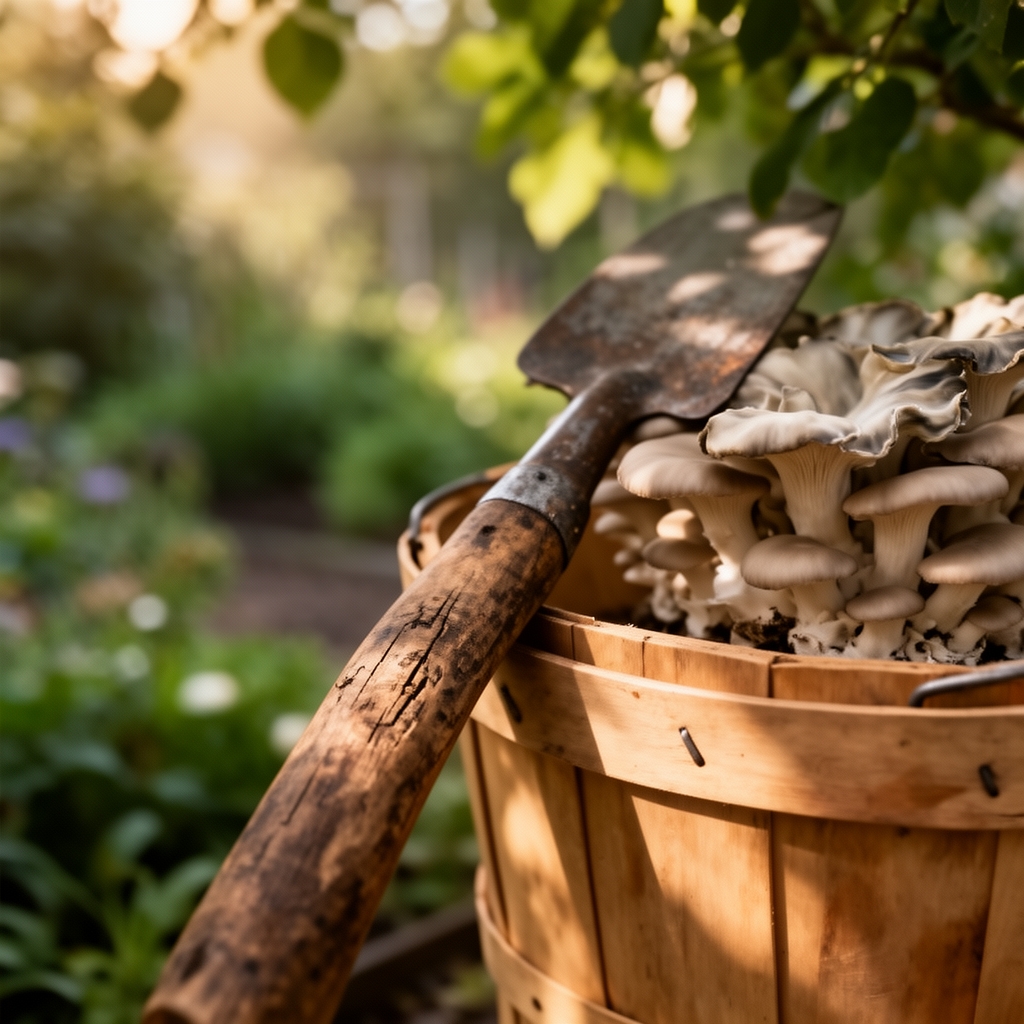
The humid air inside a closed bucket carries the earthy scent of decomposing straw as white mycelium threads race across the surface, transforming agricultural waste into protein-rich food within three weeks. Following precise steps to oyster mushroom buckets eliminates the guesswork from home cultivation, allowing growers to produce 2-4 pounds of fresh Pleurotus ostreatus per five-gallon container. Unlike traditional vegetable gardening, this method bypasses photosynthesis entirely, relying instead on saprophytic decomposition of lignocellulosic substrates. The steps to oyster mushroom buckets demand attention to sterilization protocols and spawn colonization rates, yet the system remains accessible to beginners.
Materials
The substrate forms the foundation of any bucket system. Hardwood sawdust pellets, wheat straw, or soy hulls provide the carbon-rich base that oyster mycelium colonizes. These materials naturally register a pH between 6.0-7.0, optimal for Pleurotus species. Avoid softwood products containing antifungal resins.
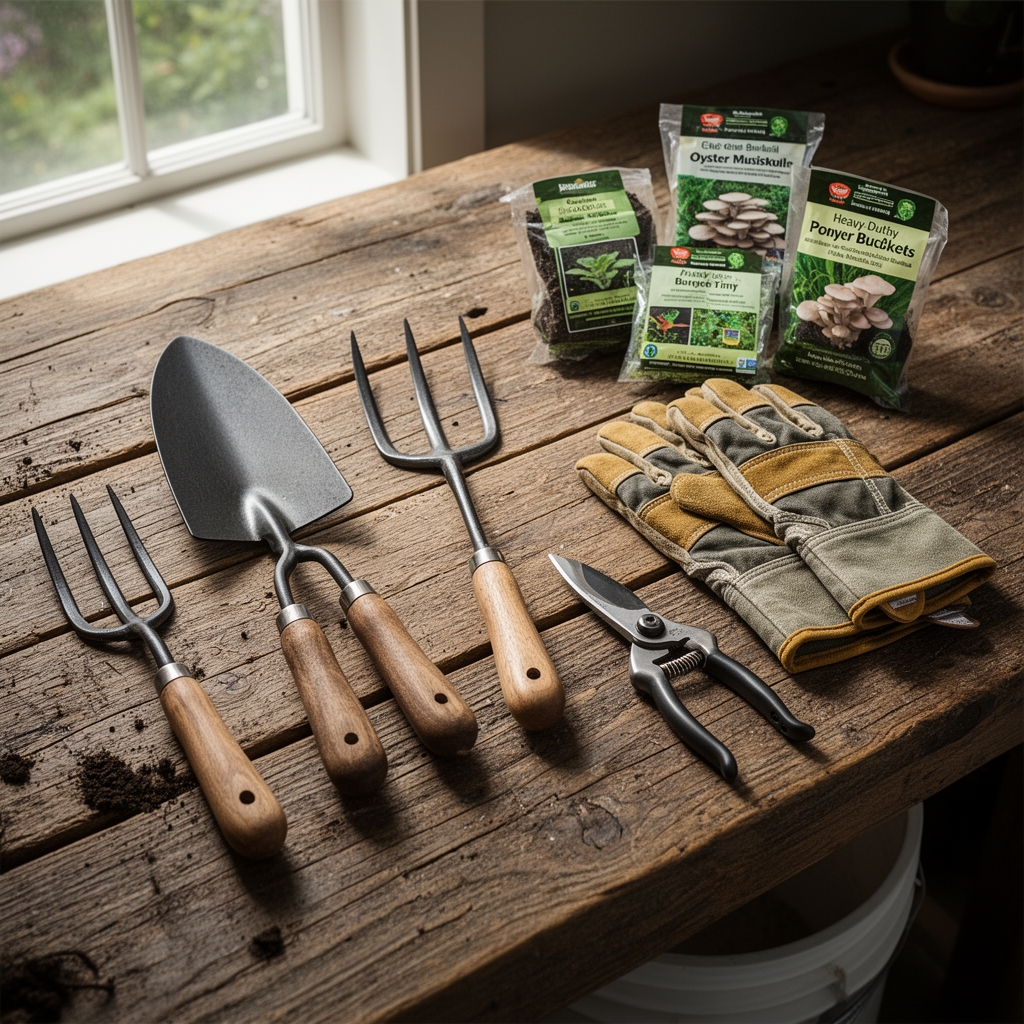
Spawn serves as the living inoculant. Grain spawn, typically colonized rye or millet, introduces aggressive mycelium at a 5-10% ratio by weight. Calculate 1-2 pounds of spawn per five-gallon bucket for reliable colonization within 10-14 days.
Supplementation alters yield potential. Wheat bran or cottonseed meal at 5-10% supplementation rates can increase biological efficiency by 20-30%, though higher nitrogen levels (above 2.5% total substrate nitrogen) invite contamination from Trichoderma species. A 4-4-4 organic amendment exceeds safe nitrogen thresholds for this application.
Hardware requirements include food-grade five-gallon buckets with lids, a 0.5-inch drill bit for fruiting holes, and micropore tape to cover holes during colonization. Hydrated lime adjusts pH if needed, targeting 7.0-7.5 to suppress competitor organisms.
Timing
Oyster mushrooms ignore traditional hardiness zones. Indoor cultivation proceeds year-round at 55-75°F, with primordium initiation triggered by temperature drops of 10°F and increased fresh air exchange. Outdoor bucket cultivation aligns with spring (April-May) and fall (September-October) when ambient temperatures stabilize between 55-70°F.
Summer attempts above 80°F result in thin, elongated stipes and reduced shelf life. Winter outdoor cultivation below 45°F stalls mycelial growth unless buckets occupy insulated spaces or heated sheds.
Colonization requires 10-21 days depending on spawn ratio and ambient temperature. Fruiting flushes emerge 5-7 days after environmental triggering. Plan for three successive flushes over 6-8 weeks before substrate nutrient depletion halts production.
Phases
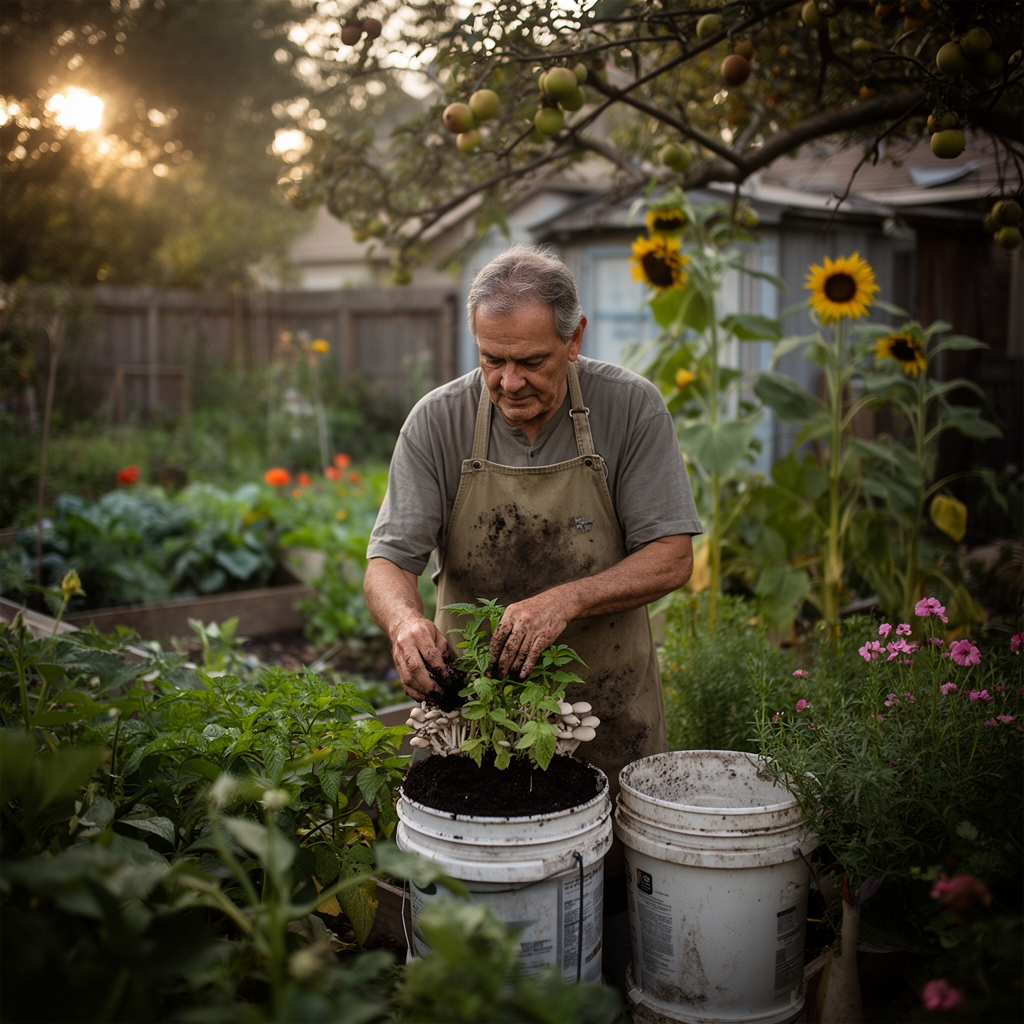
Substrate Preparation and Pasteurization
Hydrate dried substrate to 55-65% moisture content. Squeeze a handful; 1-3 water drops should emerge without streaming. Submerge substrate in 160-180°F water for 60-90 minutes to eliminate competitor organisms while preserving beneficial thermophilic bacteria. Cold water lime pasteurization offers an alternative: mix substrate with hydrated lime at pH 12-13 and soak 12-18 hours.
Drain and cool substrate to below 80°F before inoculation. Hot substrate kills spawn on contact.
Pro-Tip: Add gypsum (calcium sulfate) at 1-2% by weight to improve substrate structure and reduce clumping, enhancing gas exchange throughout the colonization phase.
Inoculation and Colonization
Drill twelve 0.5-inch holes in a grid pattern around the bucket, positioned 3-4 inches from the bottom. Layer cooled substrate and spawn in alternating 2-inch sections, beginning and ending with spawn layers for accelerated colonization. Press firmly to eliminate air pockets that harbor contamination.
Cover fruiting holes with micropore tape. Seal the bucket lid. Store at 65-75°F in darkness or indirect light. White mycelium should appear within 3-5 days, fully colonizing the bucket in 10-14 days.
Pro-Tip: Shake grain spawn vigorously before opening to separate kernels, preventing clumping that creates uncolonized pockets vulnerable to mold invasion.
Fruiting Initiation
Remove micropore tape once mycelium fully colonizes the substrate surface. Increase ambient humidity to 80-95% through tent systems or frequent misting. Reduce temperature by 5-10°F if possible. Introduce indirect light for 8-12 hours daily; oysters exhibit phototropism and orient toward light sources.
Primordia emerge as small gray pins within 5-7 days. Mushrooms double in size daily, reaching harvest maturity in 3-5 days when caps flatten and edges begin to lift.
Pro-Tip: Maintain CO2 below 800 ppm during fruiting. Excessive carbon dioxide triggers long stems and small caps, a phenomenon quantified through increased auxin distribution favoring stipe elongation over cap expansion.
Troubleshooting
Symptom: Green or blue-green mold covering substrate surface.
Solution: Trichoderma contamination indicates incomplete pasteurization or excessive nitrogen. Discard affected buckets immediately to prevent spore dispersal.
Symptom: Mycelium grows slowly or stalls.
Solution: Temperature below 60°F or substrate moisture below 50% halts growth. Rewarm buckets and mist lightly through fruiting holes.
Symptom: Long stems with tiny caps (>6:1 stipe-to-cap ratio).
Solution: CO2 accumulation or insufficient fresh air exchange. Increase ventilation or move buckets to larger spaces.
Symptom: Mushrooms abort before maturity, browning and drying.
Solution: Humidity dropped below 75%. Mist 3-4 times daily or employ ultrasonic humidifiers.
Symptom: Yellow or brown liquid pooling in bucket.
Solution: Bacterial metabolites from over-wet substrate (>70% moisture). Drain excess liquid and reduce misting frequency.
Maintenance
Mist fruiting mushrooms 2-4 times daily to maintain surface moisture without soaking. Deliver 0.25 inches of water per misting event, adjusting for ambient humidity. Low cation exchange capacity in straw substrates means minimal nutrient buffering; rely on initial substrate nutrition rather than liquid feeding.
Harvest by twisting and pulling entire clusters at the base. Cutting leaves stipe remnants that rot and attract fungus gnats. Remove all mushroom tissue; residual material blocks subsequent flush emergence.
Rest periods between flushes require 7-10 days. Maintain humidity at 70-80% during rest to prevent substrate desiccation. A second flush typically yields 60-70% of the first flush biomass. Third flushes decline to 30-40%.
Monitor for fungus gnat larvae in substrate. Yellow sticky traps capture adults. Bacillus thuringiensis israelensis (Bti) applications eliminate larvae without harming mycelium.
FAQ
How many mushrooms grow per bucket?
Expect 1.5-3 pounds total across three flushes, representing 75-150% biological efficiency (fresh mushroom weight divided by dry substrate weight).
Can buckets fruit outdoors?
Yes, during spring and fall when temperatures remain between 50-70°F and natural humidity exceeds 70%. Protect from direct sun and wind.
What causes oyster mushrooms to taste bitter?
Overmaturity triggers bitter compound accumulation. Harvest when caps flatten but before edges curl upward and sporulation begins.
Do oyster buckets need special spawn?
Species matching matters. Pleurotus ostreatus thrives at 55-75°F. Pearl oysters (P. florida) prefer 65-80°F. Pink oysters (P. djamor) require 75-85°F.
How long do colonized buckets last?
Fully colonized buckets fruit immediately or refrigerate at 37-40°F for 4-6 weeks. Cold storage extends viability but delays fruiting by 5-7 additional days.