9 Simple Ways How to Find Asparagus Tips
Asparagus spears emerge from underground crowns with military precision, pushing through soil when temperatures hold above 50°F for three consecutive days. The tender tips develop faster than most gardeners anticipate, growing up to ten inches in a single twenty-four hour period during peak season. Learning how to find asparagus tips requires understanding the plant's perennial biology, soil requirements, and the visual cues that signal harvestable spears beneath mulch and surface debris.
Materials
Successful asparagus cultivation demands specific soil amendments and tools calibrated to the crop's fifteen-year lifespan.
Soil Amendments (pH 6.5-7.5 target)
- Composted manure or alfalfa meal (3-2-2 NPK ratio), applied at 20 pounds per 100 square feet
- Rock phosphate (0-3-0), critical for crown establishment at 5 pounds per 100 square feet
- Greensand (0-0-3) for potassium and trace minerals, 10 pounds per 100 square feet
- Agricultural lime to raise cation exchange capacity, applied per soil test results
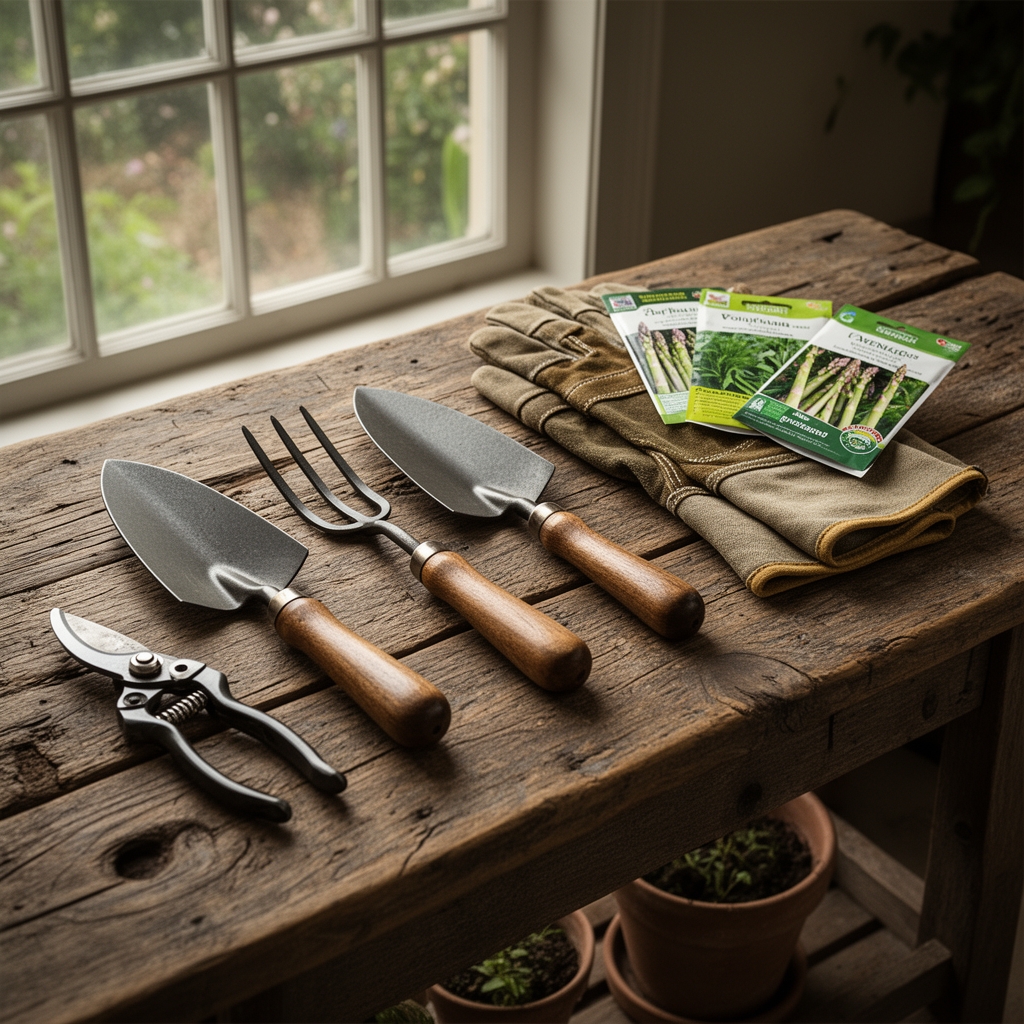
Detection and Harvest Tools
- Soil thermometer with 6-inch probe for monitoring rhizome activation
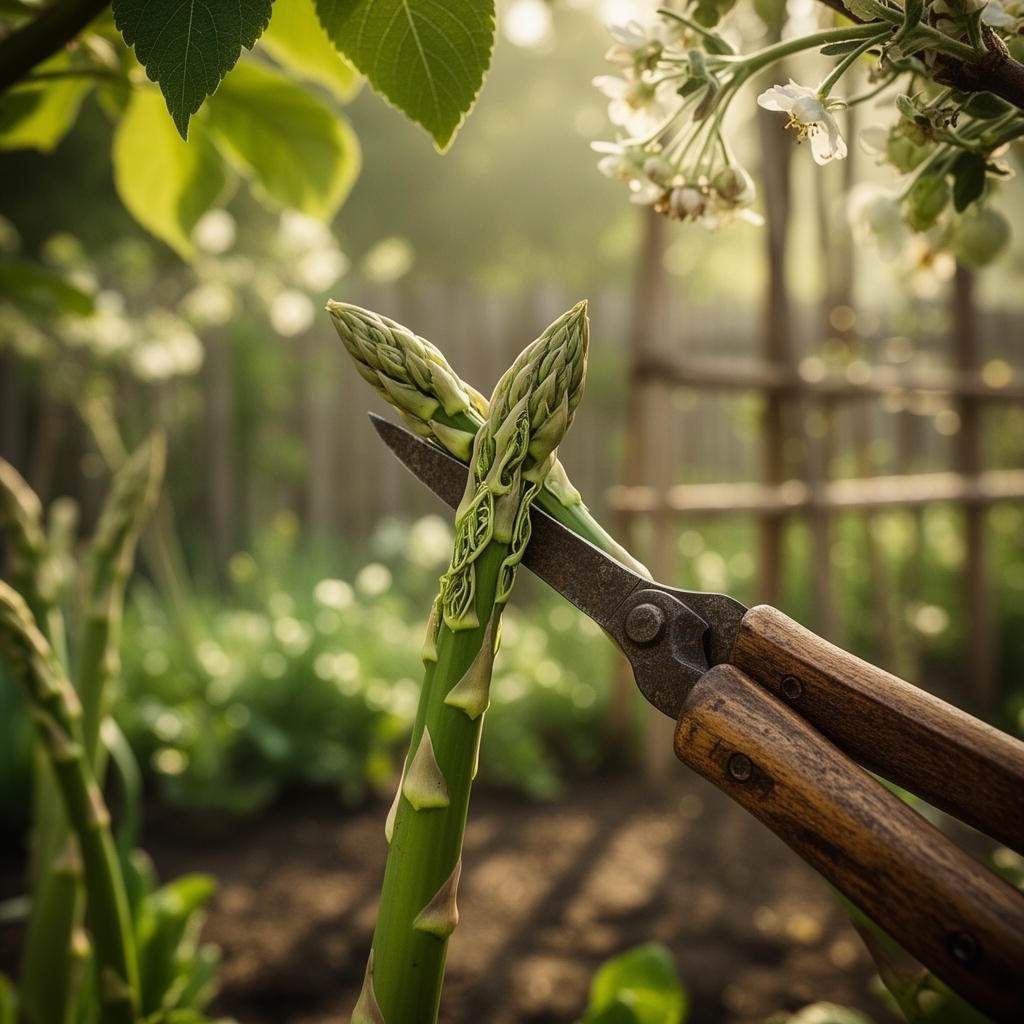
- Asparagus knife or sharp blade for clean cuts 1-2 inches below soil surface
- Rake for gentle mulch displacement without crown damage
- Marking flags to identify crown locations during dormancy
Timing
Asparagus crowns require precise temperature windows for both establishment and harvest emergence.
Planting Windows by Zone
- Zones 3-5: Install dormant crowns when soil reaches 50°F, typically late April through mid-May
- Zones 6-7: March through early April planting window
- Zones 8-9: February installation before auxin distribution triggers premature growth
Harvest Emergence Patterns
First-year crowns produce no harvestable spears. Second-year beds yield a two-week harvest window beginning when soil temperatures stabilize at 50°F for seventy-two hours. Third-year and mature beds support six to eight weeks of cutting, typically mid-April through early June in Zone 6.
Daily soil temperature monitoring reveals emergence patterns forty-eight hours before tips break the surface. Spears form when stored carbohydrates in the crown mobilize, a process triggered by degree-day accumulation rather than calendar dates.
Phases

Crown Establishment (Years 1-2)
Dig trenches 8 inches deep and 12 inches wide. Space crowns 18 inches apart with roots spread radially over soil mounds. Cover with 2 inches of soil initially, gradually filling trenches as ferns develop. This method protects emerging auxin-rich tips while encouraging deep root penetration.
Pro-Tip: Inoculate planting trenches with Glomus species mycorrhizal fungi at 1 tablespoon per crown. These symbiotic organisms increase phosphorus uptake by 40% and improve drought tolerance.
Spear Location (Early Season)
Inspect beds at dawn when temperature differentials make emerging tips visible as subtle soil cracks or frost-free spots. Remove mulch in 6-inch circles around known crown positions. Watch for purple-tinged or green spear tips 1-3 inches tall, the optimal harvest stage.
Pro-Tip: Install shallow guide wires 3 inches above soil surface in a grid pattern. Spears contact wires during emergence, creating slight wire movement that reveals precise locations.
Active Harvest (Weeks 3-8)
Cut spears when tips reach 6-8 inches above soil and before scales begin to separate (fern initiation). Harvest every other day during peak production to prevent energy diversion to unwanted fern development. Leave spears thinner than a pencil to mature into ferns for carbohydrate production.
Pro-Tip: Harvest in early morning when turgor pressure peaks. Spears contain 20% more sugars and snap cleanly at ground level with proper hydration.
Fern Maturation (Post-Harvest)
Allow all emerging spears to develop into 4-6 foot ferns after the harvest window closes. These structures photosynthesize and store carbohydrates in the crown for next season. Maintain fern canopy until natural senescence in fall.
Pro-Tip: Apply foliar kelp spray (0-0-1 analysis) at three-week intervals during fern growth. Cytokinins in kelp increase crown bud formation by 15-25%.
Troubleshooting
Symptom: No Visible Spears Despite Warm Soil
Solution: Excavate 6 inches from crown center to check depth. Crowns buried beyond 4 inches delay emergence by one to two weeks. Add soil thermometer probes at actual crown depth rather than surface measurement.
Symptom: Crooked or Malformed Spears
Solution: This indicates compacted soil or physical obstructions. Core-aerate beds in fall to 10-inch depth. Remove rocks and debris that force spears to grow laterally before surfacing.
Symptom: Spears with Brown, Water-Soaked Tips
Solution: Phytophthora crown rot, exacerbated by poor drainage. Improve soil structure with coarse sand (20% by volume). Apply Trichoderma harzianum as biological fungicide at label rates.
Symptom: Asparagus Beetle Damage (Chewed Tips)
Solution: Hand-pick orange and black beetles at dawn. Apply spinosad (organic) at 4 fluid ounces per gallon, targeting larvae on ferns.
Symptom: Premature Fern Development (Tips Separate Early)
Solution: Excessive nitrogen forces rapid, weak growth. Reduce nitrogen inputs to 1 pound actual N per 100 square feet annually. Increase potassium to strengthen cell walls.
Maintenance
Provide 1 to 1.5 inches of water weekly during fern growth, measured with rain gauges. Drip irrigation applied for six-hour sessions twice weekly maintains consistent moisture at the 12-18 inch root zone depth.
Apply 2 inches of compost mulch in late fall after fern removal. This feeds soil biology and moderates winter temperature fluctuations at crown level.
Side-dress with 5-10-10 fertilizer at 3 pounds per 100 square feet immediately after final harvest. This replenishes depleted crown reserves without forcing late-season spear production.
Test soil pH annually. Asparagus depletes calcium and magnesium reserves. Broadcast dolomitic lime at 10 pounds per 100 square feet every third year to maintain cation balance.
FAQ
How deep do asparagus tips form?
Crown buds initiate 2-4 inches below soil surface. Proper planting depth of 3-4 inches allows tips to emerge within seven to ten days of activation at 50°F soil temperature.
Can you find asparagus tips in shade?
No. Asparagus requires eight hours of direct sunlight for adequate carbohydrate production. Shaded crowns produce 60% fewer spears and decline within five years.
Why do some tips never emerge above ground?
Spears abort when soil temperatures drop below 45°F after initiation. Heavy clay or crusted soil physically prevents emergence. Soil crusting requires surface cultivation to 1-inch depth.
How many tips does one crown produce annually?
Mature crowns generate eight to twelve harvestable spears per season. Total bud initiation reaches twenty to thirty, but only the strongest complete emergence.
Do asparagus tips regenerate after cutting?
The specific meristem is removed, but adjacent crown buds activate within forty-eight hours. Each crown maintains fifteen to twenty dormant buds in reserve for continuous production throughout the harvest window.