6 Easy Ways How to Do Parsley Indoor Care
Growing parsley indoors transforms a sunny windowsill into a year-round harvest station. Fresh leaves emerge every 8 to 10 days once established, releasing sharp, green volatiles when brushed. Mastering how to do parsley indoor care requires attention to container depth, light intensity measured in foot-candles, and nutrient timing. The biennial herb (Petroselinum crispum) adapts well to controlled environments when root zones stay between 60 and 70 degrees Fahrenheit. Indoor cultivation eliminates frost risk and extends productive harvest windows by 200 percent compared to outdoor beds. Understanding how to do parsley indoor care means replicating the cool Mediterranean spring conditions the plant evolved to exploit.
Materials
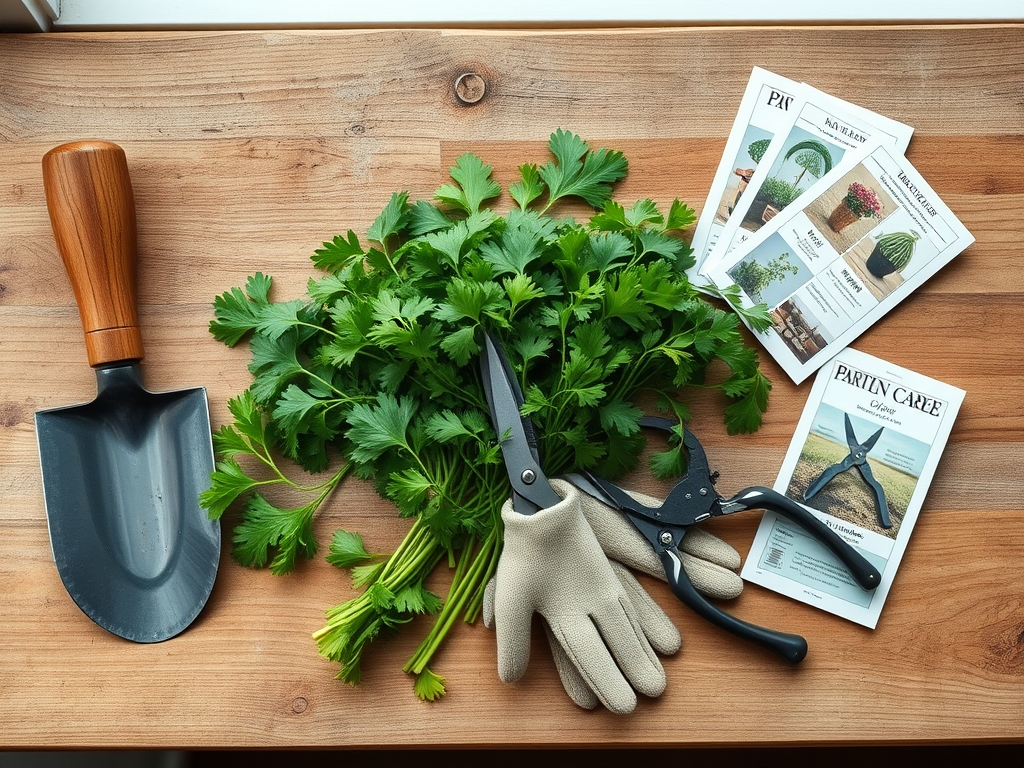
Select containers at least 10 inches deep to accommodate the taproot, which descends 12 to 18 inches at maturity. Drainage holes are non-negotiable. Use a growing medium with pH between 6.0 and 7.0, verified with a slurry test. A base mix of 60 percent peat or coir, 30 percent perlite, and 10 percent worm castings provides adequate cation exchange capacity and aeration.
Amend with a balanced organic fertilizer rated 4-4-4 or 5-5-5, applied at 1 tablespoon per gallon of media before planting. Mycorrhizal fungi inoculant at the root zone accelerates phosphorus uptake and improves drought tolerance. Supplement with liquid kelp extract (0-0-1 NPK) every 14 days to supply trace minerals and natural auxins. Avoid high-nitrogen synthetic salts above 10-5-5, which promote excessive foliage at the expense of essential oil concentration.
Full-spectrum LED grow lights rated at 400 to 600 foot-candles, positioned 6 inches above foliage, compensate for low winter sun angles. A simple timer maintains 14 hours of light daily.
Timing
Parsley thrives indoors year-round but responds to seasonal light cues. In USDA Hardiness Zones 3 through 6, begin indoor sowings 8 weeks before the last spring frost date to transplant seedlings outdoors later. For continuous indoor production in Zones 7 through 10, initiate sowings every 4 weeks from September through March.
Seed germination requires soil temperatures between 50 and 70 degrees Fahrenheit. Stratify seeds in a damp paper towel inside the refrigerator for 7 days before sowing to break dormancy and reduce germination time from 21 days to 10 days. Late winter sowings (January through February) capitalize on increasing photoperiods, reducing bolting risk.
Phases
Sowing
Soak seeds in room-temperature water for 24 hours to leach germination inhibitors. Sow three seeds per 2-inch cell or 1/4 inch deep directly in the final container. Firm soil contact is critical. Cover with a humidity dome or plastic wrap until radicles emerge.
Maintain substrate moisture at field capacity but not saturation. Bottom watering prevents damping-off fungi (Pythium spp.) from colonizing emerging hypocotyls. Germination occurs in 10 to 14 days under consistent 65-degree conditions.
Pro-Tip: Apply a dusting of milled cinnamon to the soil surface. Cinnamaldehyde compounds suppress Rhizoctonia and Fusarium without harming beneficial microbes.
Transplanting
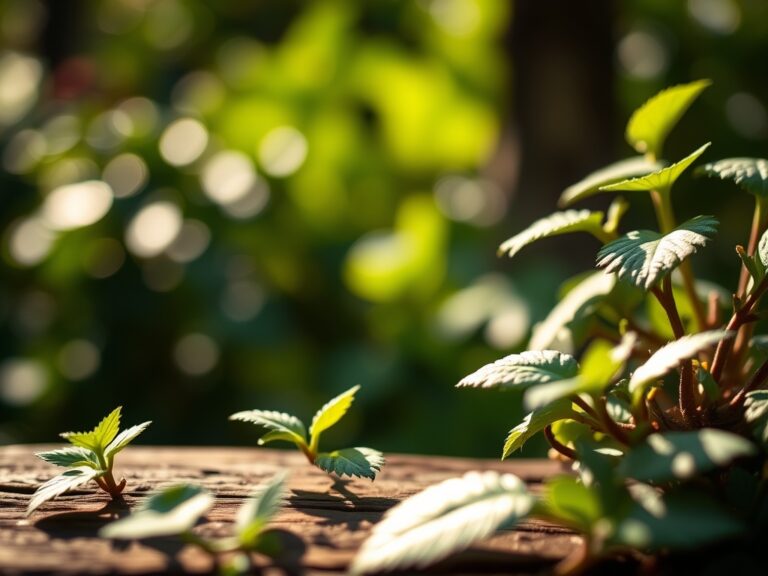
Thin to the strongest seedling per cell when true leaves appear. Transplant when four true leaves have expanded and roots circle the cell. Handle only by the cotyledons to avoid damaging the fragile stem cortex.
Set transplants at the same depth they grew in cells. Pressing too firmly collapses air pockets and restricts root exploration. Water in with a dilute solution of fish emulsion (5-1-1 NPK) at half strength to reduce transplant shock.
Pro-Tip: Prune the terminal bud when six leaves have formed. This apical pruning redistributes auxin to lateral meristems, doubling harvestable stems within 3 weeks.
Establishing
Roots colonize the container in 3 to 4 weeks. New growth accelerates when root tips reach container edges and mycorrhizal networks mature. Harvest begins when plants reach 6 inches in height.
Cut outer stems 1 inch above the crown using sharp scissors at a 45-degree angle. This cut angle sheds moisture and prevents rot. Leave the inner three stems intact to sustain photosynthetic capacity.
Pro-Tip: Rotate containers 90 degrees every 3 days. Uniform light exposure prevents phototropic bending and produces symmetrical, upright growth.
Troubleshooting
Symptom: Yellowing lower leaves with green veins.
Solution: Iron deficiency due to high substrate pH. Drench with chelated iron at 1/2 teaspoon per gallon. Adjust pH down to 6.5 using sulfur.
Symptom: White powdery coating on leaves.
Solution: Powdery mildew (Erysiphe spp.) from poor air circulation. Increase spacing, reduce humidity below 60 percent, and spray with 1 part milk to 9 parts water weekly.
Symptom: Wilting despite moist soil.
Solution: Root rot from overwatering or poor drainage. Remove plant, trim blackened roots, repot in fresh media with added perlite, and reduce irrigation frequency.
Symptom: Stunted growth and purple leaf undersides.
Solution: Phosphorus deficiency or cold stress. Raise temperature above 60 degrees Fahrenheit and apply bone meal (3-15-0) at 1 teaspoon per 6-inch pot.
Symptom: Sudden stem collapse at soil line.
Solution: Damping-off fungi. Increase air movement with a small fan, allow surface to dry between waterings, and avoid overhead irrigation.
Maintenance
Provide 1 inch of water per week, applied when the top 1/2 inch of substrate feels dry. Water early in the day so foliage dries before nightfall. Feed every 14 days with liquid fertilizer at half the label rate once harvest begins.
Maintain daytime temperatures between 65 and 75 degrees Fahrenheit and night temperatures above 55 degrees. Parsley tolerates brief dips to 40 degrees but growth slows below 50 degrees.
Prune flower stalks immediately when they emerge. Bolting redirects carbohydrates from leaves to seeds, reducing essential oil content by 40 percent and making foliage bitter. Remove yellowed basal leaves weekly to improve air penetration and reduce disease pressure.
Clean leaf surfaces monthly with a damp cloth to remove dust that blocks stomata and reduces photosynthetic efficiency by up to 20 percent.
FAQ
How often should I harvest parsley indoors?
Harvest every 7 to 10 days, removing no more than one-third of total foliage per session. This interval allows regrowth without depleting carbohydrate reserves.
Can I grow parsley from grocery store cuttings?
No. Parsley does not root reliably from cuttings due to low auxin concentrations in mature stems. Propagate from seed or divide established crowns.
Why does my indoor parsley taste bitter?
Excessive nitrogen, insufficient light below 300 foot-candles, or temperatures above 80 degrees Fahrenheit increase bitter sesquiterpene production. Adjust light and reduce fertilizer nitrogen content.
Do I need to hand-pollinate indoor parsley flowers?
Only if saving seed. Flowers are self-incompatible and require cross-pollination by insects. For culinary use, remove flowers before they open.
What causes brown leaf tips indoors?
Low humidity below 40 percent, fluoride or chlorine in tap water, or salt accumulation from over-fertilization. Use filtered water and leach pots monthly with plain water to flush salts.